
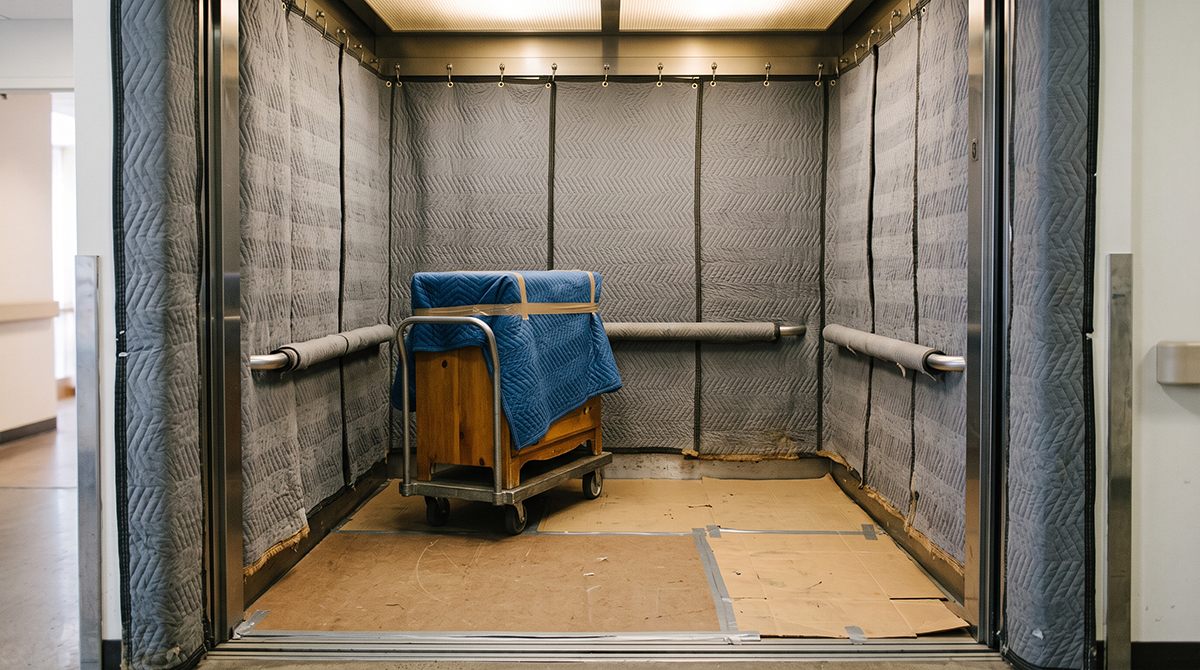
Cover the walls, the control panel side and the floor, hang the pads so they can’t slide, and check your building’s rules before you book the elevator. That’s most of the job. Cab damage usually comes from furniture corners, dolly wheels and loose debris, not anything exotic, and a little setup beats explaining a dented panel to building management.
What elevator protection pads actually do
Elevator protection pads are quilted, padded panels that hang on the cab walls and absorb the scrapes and dents a move or a construction run would otherwise leave behind. They’re temporary. You hang them before the job and take them down when you’re finished.
They earn their keep anywhere heavy or awkward items ride the elevator: apartment moves, furniture deliveries, contractor material runs and freight. Walls get most of the attention, but the weak spots are usually the handrail, the ceiling trim, the door frame edges and the control panel. Good elevator cab protection covers those too, not just the big flat panels.
Keep expectations realistic, though. Pads cushion scrapes and glancing bumps. They won’t save a wall from a loaded dolly driven straight into it, and they don’t replace floor protection. Think of them as one layer of the plan, with careful loading as the other.
Before you book the elevator
Pads are only half of the plan. Before you pick a date, ask building management a few things:
- Do they require pads, and do they supply their own? Some buildings do. One 2021 NYC co-op notice asks residents to use management’s custom padding for move-ins, move-outs and deliveries, so don’t assume you can bring whatever you like.
- Is there a reservation window for the elevator, and is a second car available during your move?
- What do they expect for floor and threshold protection? That’s often a separate requirement from wall pads.
- Do they want to document the cab’s condition before you start?
Your building sets its own rules, so ask instead of guessing. A two-minute email now can save you a rescheduled move.
Step-by-step: setting up the cab
1. Measure each wall
Measure every wall, including the door side and the control panel wall. Cabs in the same building can differ, especially after one has been renovated. If you plan to use hooks or clamps, check the clearance behind any panels and handrails too.
Write the numbers down in inches, then compare them to the pad sizes you’re considering. You want coverage from the floor line up past the height furniture will reach, with the pads overlapping slightly so there are no bare seams at the corners.
2. Choose how the pads hang
How the pads attach matters as much as the pads themselves. Here are the common options:
| Method | Fits | Watch for |
|---|---|---|
| Grommet pads on hooks or studs | Cabs with hanging points | Pads can shift if hooked only loosely |
| S-hooks on handrails or trim | Quick one-day moves | Slides under bumps |
| Clamps on pads without grommets | Cabs with space behind panels | Confirm the cab accepts them |
| Tension rod or magnetic hooks | Specific cab types | Check the wall material first |
Elevator pad clamps are handy when a pad has no grommets, but they need room behind the panel to bite. Magnets only work if the wall is actually magnetic, and plenty of cab walls aren’t. Look at your cab before you decide, and ask the building what it allows.
If you’re doing a quick one-day move, the simplest hanging method that holds is usually the right one. If you’re doing a multi-week renovation, spend the extra time on a more secure setup, since you’ll be living with it every day.
3. Cover the door area and floor
The door frame edges take a beating because everything goes through them. Pad them if you can. If the building asks for floor protection, put it down before the first load, and make sure it’s laid flat so a dolly wheel doesn’t catch an edge.
4. Secure the bottom edges
Pads tend to walk away during loading, and the bottom edge is where it starts. Some manufacturers describe taping or weighting the lower edge. Before you stick anything to a cab surface, check the building’s rules, because adhesives can mar finishes that pads are supposed to protect. A snug hang at the top plus a bottom edge that sits against the wall usually does more than a pile of tape.
5. Load carefully
Plan your route from the door to the elevator before the first item moves. Stage the load near the elevator so each trip is quick and nobody is wrestling a sofa around a corner while the doors try to close. If your building offers a service mode or a way to hold the car, ask about it ahead of time.
Protect furniture corners so they’re not the sharpest thing in the cab, and load heavy pieces first and low. Stay under the cab’s posted capacity. Pads protect finishes, not the elevator’s mechanics, and they don’t make an overloaded car safe.
Pad materials and fire ratings
Elevator cab pads come with different outer fabrics, commonly vinyl-coated polyester, canvas or nylon, and different padding thicknesses. A thicker pad soaks up more of a bump, but it can also be bulkier to hang and store.
You’ll see fire-rating language on some products, often citing standards such as ASTM E84 or NFPA 701. Treat those as manufacturer claims. Ask your supplier for documentation, and ask your building what rating, if any, it requires. Don’t assume one pad meets every building’s standard.
Short move versus long renovation
For a move-in day, quilted pads are usually all you need. They go up in the morning and come down by evening.
A renovation is a different animal. Weeks of material runs, tool carts and debris put far more wear on pads than a single move. If that’s your situation, ask about heavier options, check the pads regularly for tears and loose hardware, and plan to replace worn sections instead of patching them with tape. Sweep the cab floor between runs too. Grit under a floor cover scratches faster than you’d think.
Drywall dust and wet materials are worth a thought as well. Bag or cover loose debris before it rides up, and wipe up spills right away so they don’t soak into the pads or the cab floor.
What to do after
Take the pads down carefully and inspect the cab as you go. Look at the walls, handrail, door frame and floor. Clean the pads if you plan to reuse them, and store them dry and flat or loosely rolled.
The best protection against a damage dispute happens before the job starts. Photograph the cab beforehand, including any scuffs that are already there, and send the building a note if they want one. Then you’re not arguing about whether a mark was yours.
Frequently Asked Questions
What are elevator protection pads?
They’re padded, usually quilted panels that hang inside an elevator cab to shield the walls from scrapes, dents and scuffs during moves, deliveries and construction. They’re temporary and come off once the job is done.
Do I need pads for a small apartment move?
Check with your building first. Some require them for any move-in or delivery, and some don’t. Even if yours doesn’t, a small move can still ding a cab if a dresser corner swings into a wall.
How do I keep elevator pads from sliding?
Hang them from solid points like hooks, studs or a handrail, and make sure the bottom edge sits flush against the wall. Check with your building before using tape or any adhesive on cab surfaces.
How many pads do I need for one cab?
It depends on the cab and the pad size. Measure each wall, then add up what it takes to cover them with a little overlap at the corners. Cabs vary, so don’t assume the count from one elevator applies to another.
Does the building or the mover supply them?
It varies. Some buildings provide or require their own pads, some movers bring them, and some jobs leave it to you. Ask building management and your mover before moving day so nobody shows up empty-handed.
Can I reuse the pads for another job?
Often, yes, if they’re clean, dry and still hanging securely. Check for torn fabric, crushed padding and damaged grommets or hardware before the next job, and replace anything that no longer holds its shape.
Let My Main Supply help you protect your elevator
Not sure which pad set fits your cab? Call us at 1-800-494-4794 or email [email protected] to ask about our elevator protection pads or to place your order. You can also browse our janitorial supplies for the rest of your cleanup kit.
